
Transforming Your World One Sound at a Time
““The power of music is the key to re-working the entire nervous system.””
Treatment Areas Include
Attention - ADD
Auditory Processing
Sensory Integration
Speech & Language
Behavior
Motor Skills
And so much more!
Solutions for Many Issues
Music-based brain activation
Pregnancy programs
Attention and learning support
Auditory and sensory processing
Motor skills and behavior support
Musician enhancement programs
About Listen For Change and Sue Sonkin
Listen for Change is devoted to using specially designed Tomatis music to change lives. We accomplish this by utilizing The Tomatis Method.
Lead therapist Sue Sonkin is uniquely credentialed as a Level 4 Tomatis Consultant. She is a pioneer in provisioning of services for children with special needs and has decades of experience as an occupational therapist . With Sue’s leadership, Listen for Change provides each person a uniquely individualized program to achieve the greatest benefit.
About Tomatis Method
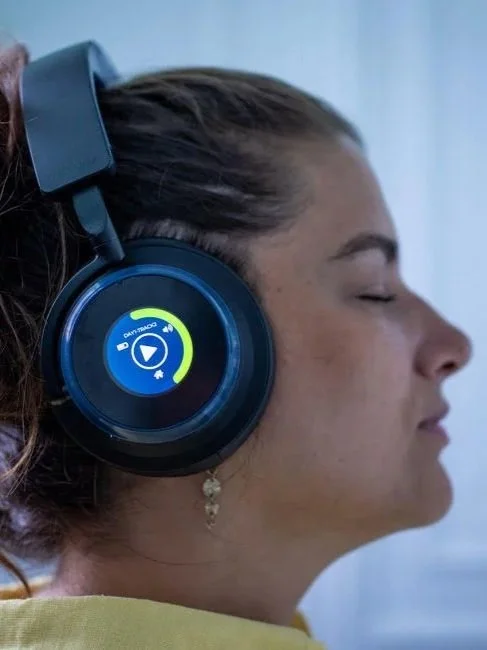
Research on the Tomatis Method indicates its potential to improve auditory processing, behavior, and cognitive functions, particularly for autism and learning disabilities, by leveraging neuroplasticity through specialized sound stimulation. Key studies often highlight improvements in attention, language processing, and sensory regulation.
ADHD
If You Can’t Attend, How Can You Learn?
When you have ADHD, you have difficulty directing and maintaining attention. This can be seen in small children not acknowledging or processing sound. It can also be seen in business people having maintaining their holding attention in a meeting.
How would you feel if you were being constantly bombarded by sound and couldn’t turn it off? More importantly, you can’t filter out what’s important from the background sounds. This is one of the experiences of people with ADHD, and why they often seem distracted or disconnected. Some people react with high energy, trying to keep up with the stimuli while others shut down, because they can’t manage it.
Being able to localize to a sound (establish the source) is a precursor to attention and learning. It’s important to determine whether it’s due a hearing or processing issue. In either case, Tomatis can help.
Tomatis for the ADHD Brain
Hearing is actually a function of stimuli that goes through both the ear and our bones. Typically, this information arrives at essentially the same time. With the Tomatis technique we can make subtle changes so that sound traveling by bone and ear conduction don’t arrive at exactly the same moment. This makes the stimulation surprising every single time to all brains, ADHD brains included.
While Tomatis has well observed benefits for listening skills, that is not our sole goal. The overriding goal is to train the brain’s attention mechanisms for all incoming stimuli. A brain that can attend better will be better prepared to learn.
Auditory Processing
Hearing and Listening Are Not the Same Thing
Hearing is detecting sound. Listening is processing sound. To make sense of sound, your brain need to process, understand and respond (the essence of auditory processing).
Here’s a simple auditory processing example:
You call your child to come to dinner, but he doesn’t move. If his hearing is fine, he may not be understanding what you’re expecting of him. As a result, he cannot formulate an appropriate response. This is not a lack of compliance or bad behavior. If he’s reprimanded, he now has two problems: he doesn’t understand the verbal request and the adults are angry with him.
This is not limited to children. I have seen successful adults lose track of conference room meetings or conversations. How many times do you hear people complain that their partners don’t listen to them? It’s very difficult to excel in academic, social, and business situations when you have auditory processing issues. People misunderstand and think you’re disinterested or worse.
Tomatis is an individualized sound training program that works on auditory processing issues on multiple levels. Using the Tomatis system, a highly trained practitioner can control the sound simulations’ arrival to the ear and the bone, creating a series of surprises for the brain. The brain in turn adjusts resulting in better auditory processing.
Tomatis sound training is a highly specialized practice. It’s important to know the level of expertise or training of a practitioner, as each level confers a new set of skills. Listen for Change uses the skills of a level 4 practitioner, the highest credential in Tomatis training.
If you or someone you care about:
Doesn’t turn when their name is called
Finds some sounds uncomfortable or overwhelming
Doesn’t follow directions
Has trouble staying connected to conversations or meetings
An auditory processing issue may be a factor, we would like to try to help.
Sensory Integration
When your sensory integration is wrong, how can anything else be right?
Difficulties in sensory integration make your world a confusing place. If you perceive friendly touch as frightening, or environmental sounds as threatening, it makes it very hard to negotiate your environment. If your receptors aren’t sending out the correct information about where you are in space, it becomes impossible to move through it: learn to crawl, walk, skip, run, do a jumping jack… it’s endless.
Imagine the chaos in sensory integration if any one of these processing levels is not happening.
Some of the areas impacted can include:
attention,
balance,
postural control,
motor planning,
hyper-sensitivity,
inability to follow directions,
behavior,
social skills,
language
… everything
For sensory integration to occur smoothly, all sensory information must travel a certain circuit. Initially, it comes in through the end organs (ears, eyes, nose, skin, joint receptors, and others) to your spinal cord. From your spinal cord it goes to the lowest levels of your brain stem, for preliminary processing. Here it is “screened” so that just the right amount of stimuli is available for processing- not more not less. The other action that happens here is recognition of the stimuli so it can be sent to the right place for processing. You want sound to go to the sound cortex, not to smell.
The next step in sensory integration is more specialized processing, such as taking sounds and turning them into words. This information then goes to the highest level of the brain for association with memories and other types of learning to determine meaning and response. Example, if sounds are turned into the word FIRE, the appropriate response might be to turn and run.
With the help of a highly trained Tomatis professional, an individualized program can be developed to encourage the brain to do a better job with sensory integration. Through the various functions available, Tomatis practitioners create an individualized program to help train the brain to become more vigilant and coordinated. Although we are using sound and vibration, we are actually addressing the mechanisms of all sensory processing. The Bonus is that all sensory integration will benefit!
Testimonials
Here are some happy parents and clients sharing
“J's transition into his new self-contained program has been quite good and he seems to be enjoying it! Since we last saw each other, J's language and relatedness continue to improve by the day! I am so happy to see all these great gains. Since we are about 6 months since we finished our program, I wanted to touch base about next steps. I also spoke to Dr. O about perhaps doing another Tomatis series and she thought it might be a good idea as well.”
— Kristy E., NY"My 2.5-year-old daughter just completed 15 days of listening therapy with Sue and it was fantastic. We have seen improvements in many different areas (less self-stimulating behavior, more verbal, follow commands better, trying new foods, etc.). Sue couldn't have been sweeter to our little girl and we are so grateful. We can't wait for our next session in August."
— Abigail B., Katonah, NY"I was truly blessed to find this wonderful service. I had a most unpleasant few years with many family members dying within a 9-month period of time. I had no previous experience with depression. After two years of therapy and medication I was much improved, but not where I wanted to be. A professional suggested that I try this technique. It was magical. After 60 hours of listening, my depression was resolved. I am very grateful and I highly recommend Listen for Change."
— Rebecca N., New York, NY
